Home>Health & Nutrition>Mental Health>The Mental Side of Running That Most Training Plans Completely Ignore

Mental Health
The Mental Side of Running That Most Training Plans Completely Ignore
Published: August 19, 2026
Most training plans skip cognitive training entirely. Here's why reaction speed, working memory, and processing power can make or break your race performance.
(Many of the links in this article redirect to a specific reviewed product. Your purchase of these products through affiliate links helps to generate commission for Therunningadvisor.com, at no extra cost. Learn more)
You log the miles. You do the tempo runs, the long slow days, the hill repeats. You stretch, foam roll, and obsess over your VO2 max. But there is a whole category of training most runners never touch, and it costs them real seconds, sometimes real minutes, on race day. That category is cognitive fitness. The brain is not a passenger on your runs. It is the driver, the navigator, and the decision-maker, all at once. Train it like one.
Key Takeaway: Physical fitness is only half the picture for runners. Cognitive benchmarks like reaction speed, working memory, and information processing directly shape race-start response, course navigation, and split-second decisions mid-race. Runners who add even basic mental training to their routines consistently perform better under pressure. The gap between a good finish and a great one often comes down to what is happening above the shoulders.
Why Your Brain Limits You Before Your Legs Do
Most runners hit a wall not because their muscles give out first, but because their brain calls it quits. Research in exercise science has long pointed to a concept called central governor theory, where the brain actively regulates effort and output to protect the body from harm. This means your perception of fatigue, your ability to push through discomfort, and your capacity for sharp decision-making all fall under the brain’s direct control. Aerobic capacity has a ceiling for every runner. Cognitive capacity, on the other hand, is far more trainable than most people realize.
The problem is that standard training plans treat the brain as a background system. Load it up with mileage, the thinking goes, and it will adapt. But cognitive training and physical training are not the same thing. A runner with elite aerobic fitness and poor reaction time will still get boxed in at the start line. A runner who cannot hold a pacing strategy in mind mid-race will blow up long before the finish. These are not edge cases. They happen in every race field, at every level.
The Race Gun Goes Off: Why Reaction Speed Is a Real Variable
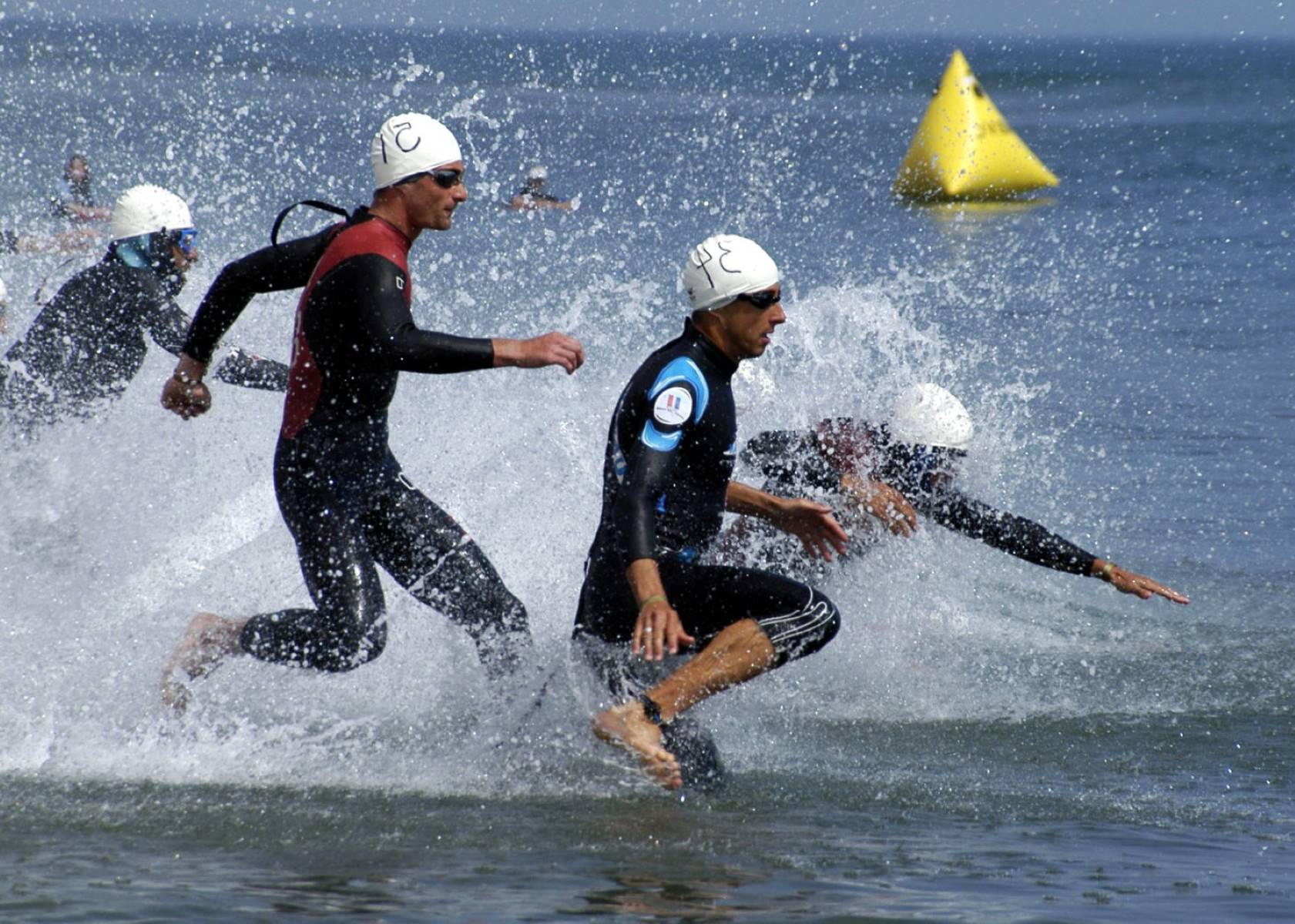
Picture yourself in the starting corral. Five hundred runners, all clumped together, all waiting for the same signal. The gun fires. How fast does your body respond? For elite runners, that gap between signal and movement is measured in milliseconds, and those milliseconds add up when you are fighting for position in the first four hundred meters of a crowded race.
Reaction time is not just a sprinting concern. Even in half marathons and marathons, the opening surge determines your position in the pack, which in turn affects your breathing space, your mental energy spent weaving around people, and your early-race heart rate. Runners who train their reaction speed through rapid response drills, or by using digital tools that measure and challenge their baseline, tend to hold cleaner lines and burn less energy in chaotic race starts.
This is a trainable skill. It is not fixed at birth. Athletes in every other sport condition their reaction time as seriously as any physical metric. Runners have just been slow to follow that logic onto the road and trail.
Working Memory on the Trail: The Forgotten Performance Metric
Here is where things get interesting. Trail runners rely heavily on working memory, the brain’s ability to hold and actively use information in the short term. On a trail with dozens of turns, elevation changes, and course markings, a runner who can mentally map the next half-mile while managing current pace and footing has a significant advantage over someone running purely on instinct.
But even road runners use working memory constantly. Holding a target pace in mind while monitoring breathing, adjusting stride for an upcoming hill, and tracking competitors around you all draw on the same cognitive resource. When that resource is depleted, usually in the back half of a long race, pacing strategy collapses. Runners either push too hard or unconsciously slow down far more than they intend.
Working memory can be trained. One practical starting point is taking a sequence memory test, which measures how well you hold and recall an expanding series of visual patterns. That cognitive demand directly mirrors what distance runners do every time they internalize a course layout, memorize their split strategy, or track their position relative to a goal pace across miles of racing. The mental skill and the athletic skill are drawing from the same pool.
Structured memory exercises work best during recovery weeks, when physical load is light but the mind can absorb new stimulus without fighting for resources. Memorizing a planned route before heading out without checking the map again, running through a race strategy mentally during easy miles, or practicing recall-based challenges in the off-season all build the same neural pathways that fire during a real event.
Processing Speed and the Choices That Win Races
Mid-race decisions happen fast. A gap opens up in front of you at mile nine. Do you surge now or hold your rhythm? A competitor accelerates. Do you match it or let them go and trust your own plan? An unexpected patch of wet pavement appears in your peripheral vision. Do you adjust your footfall or push through?
Each of these micro-decisions unfolds in under a second. The runner who processes that information fastest has a measurable advantage. This is not about intelligence in any academic sense. It is about neural efficiency, the speed at which your brain takes in sensory data, weighs options, and translates that into physical action.
Cognitive processing speed correlates strongly with athletic decision-making across multiple sports. Running is no exception. Taking a processing speed test gives you a concrete baseline to work from, rather than guessing at where your cognitive edge falls. From there, improvement comes through targeted practice: activities that require rapid visual input and immediate response, pattern recognition under time pressure, or even games designed to train attention and reflexes under pressure.
Research on working memory and cognitive training suggests that consistent practice produces measurable improvements in processing efficiency, with benefits that transfer to real-world performance tasks. Running is very much a real-world performance task, and every split-second call you make in a race draws directly on that efficiency.
How Cognitive Load Affects Late-Race Pacing
Pacing is one of the most cognitively demanding tasks in distance running, and almost nobody talks about it that way. To run an even or negative split, you must constantly monitor incoming data from your body, compare it against a stored target, and make real-time adjustments. That process draws on both working memory and processing speed simultaneously, and it draws on them hardest in the final miles when everything else is already running hot.
What happens when cognitive fatigue sets in? When the brain is taxed, the quality of secondary tasks degrades first. For runners, the primary task becomes simply moving forward. Pacing judgment becomes the secondary task, and it suffers. This is why so many runners fall apart late in a race, not because their legs are gone, but because their cognitive bandwidth is spent and they can no longer execute the strategy they set out with.
Training for this requires mimicking those conditions in practice. Doing mental tasks during the last portion of a long run, running arithmetic or memory recall while fatigued, forces the brain to operate under the same dual-task conditions it faces in a race. It is uncomfortable. That discomfort is exactly the adaptation signal you are looking for.
Building Mental Fitness Into Your Training Week
Adding cognitive training does not require scrapping a current plan. It fits alongside existing structure without competing for physical recovery time, which makes it one of the most accessible performance edges available.
Mental training sessions work best on easy days or rest days, when the brain gets stimulus without the body needing to recover from hard physical output. Even ten to fifteen minutes of focused cognitive work, whether reaction drills, memory challenges, or processing speed practice, moves the needle over a full training cycle. The cumulative effect across months is significant.
Course visualization is another tool that carries genuine benefit. Before a goal race, runners who mentally rehearse the layout, pace shifts, and decision points at known difficulty spots perform better on those exact segments. This is not sports psychology fiction. It is the same working memory consolidation process that makes deliberate practice of any skill more effective over time. The brain does not cleanly separate mental rehearsal from physical experience, and that overlap is something runners can use intentionally.
The cognitive fitness stack for a serious runner looks something like this: baseline testing to establish where things stand, targeted practice in whichever areas are weakest, integration of cognitive challenges into the late stages of long training runs where real-race conditions best match, and consistent repetition across a training block.
The Performance Gains Still Waiting for You
If you have been training consistently for years and your times have plateaued, the answer is rarely more mileage. The aerobic engine has limits, and most dedicated runners are already close to theirs. The cognitive system, by contrast, often gets almost no targeted attention at all. That is a wide-open gap.
Faster reaction time off the start line. Sharper working memory to hold a race plan when fatigue sets in. Better processing speed to make the right call in the split-second moments that determine finishing position. These are real, measurable variables, and they respond to training just like legs do.
The runners who figure that out early are the ones who keep dropping time long after their peers have hit a wall. Not because they found a new workout, but because they started training the part of the race that most plans never mention.