Home>Races & Events>Local Races>How Runners Who Race Abroad Stay Connected Without Roaming Fees

Local Races
How Runners Who Race Abroad Stay Connected Without Roaming Fees
Modified: July 28, 2026
International marathon runners reveal how to avoid roaming bill shock and stay connected with live GPS, weather alerts, and family tracking via eSIM.
(Many of the links in this article redirect to a specific reviewed product. Your purchase of these products through affiliate links helps to generate commission for Therunningadvisor.com, at no extra cost. Learn more)
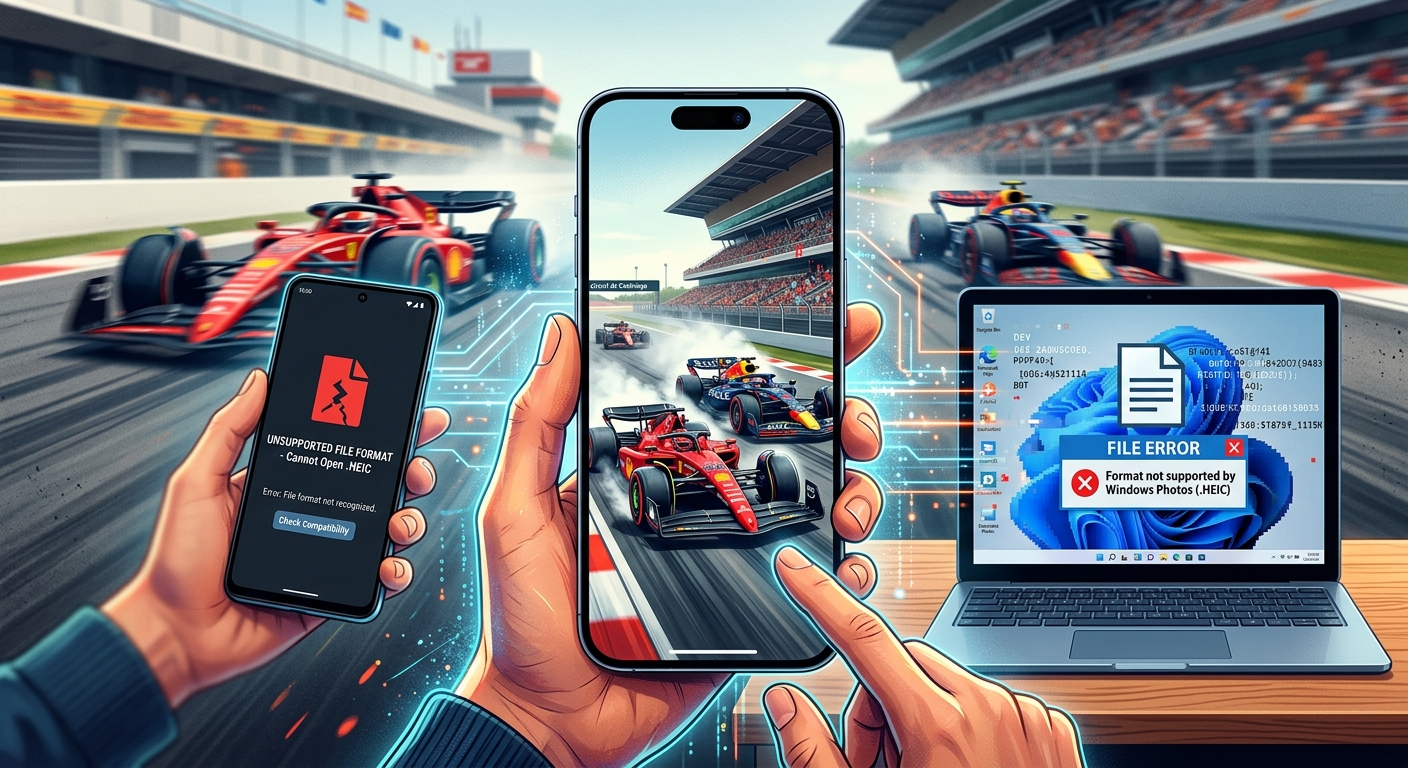
You land in Tokyo. You pick up your race bib. You open your maps app to scout the first five kilometers of the course, and your phone politely informs you that data is currently costing $15 per megabyte. By race morning, before you’ve run a single step, you could be staring down a triple-digit roaming bill. This is the quiet dread that shadows thousands of runners every year when they travel abroad for a destination marathon, and it is entirely avoidable.
Key Takeaway:
1. International roaming fees can wreck your race-day connectivity budget before the starting gun fires.
2. A digital SIM set up before you leave home gives you live GPS, weather alerts, and real-time family tracking without surprise charges.
3. Country-by-country planning matters, because network coverage and data costs vary significantly between race destinations.
Why International Runners Keep Getting Caught Out
Roaming fees have a way of hiding in plain sight. Your carrier’s travel plan sounds reasonable until you actually use your phone the way a runner uses it during race week. You are loading route maps, downloading elevation profiles, checking weather forecasts every few hours, and staying on group chats with training partners scattered across multiple time zones. Add a video call with your family the night before the race, and suddenly the data ticks up fast.
The Tokyo Marathon, for example, draws runners from over 100 countries every March. The Berlin Marathon brings in international fields of over 40,000 finishers. London’s course winds through neighborhoods that most visiting runners have never set foot in. In every case, your phone is not a luxury on race week. It is a navigation tool, a weather station, a safety net, and a lifeline to the people tracking you from home.
The runners who come home without a roaming horror story are the ones who solved the problem before they boarded the plane.
What You Actually Need Your Phone to Do During a Race
Most runners underestimate their connectivity needs until they are standing in an unfamiliar city trying to find the gear check tent. Here is what real race-day phone use looks like:
- Live GPS mapping to navigate from your hotel to the start line, especially in a city where you do not speak the language
- Race-day weather apps that pull current updates, not cached forecasts from 12 hours ago
- Messaging apps for coordinating with spectators who want to cheer at specific mile markers
- Real-time tracking links shared with family members watching from another continent
- Emergency contact access, because things happen and you need a working phone
None of that works if your data is switched off or throttled because you hit your roaming limit two days before the race.
The eSIM Solution That Most Runners Overlook
A physical SIM swap used to be the standard fix. You land, you find a carrier kiosk, you swap out your SIM, you hope you remember your own number, and you spend the first hour of your trip troubleshooting instead of jet-lag walking. It works, but it is friction you do not need on race week.
An embedded SIM, or eSIM, removes all of that. It is a digital SIM profile that loads directly onto your phone without a physical card. You buy a local or regional data plan before you leave home, activate it with a QR code, and your phone switches networks the moment you land. No kiosk queues. No losing your home SIM in a tiny hotel bathroom. No gaps in coverage between the airport and your accommodation.
Reading a solid eSIM guide before your trip is worth the 20 minutes it takes. The setup process varies slightly between phone models, and knowing what to expect, such as how to activate dual-SIM mode so your home number still receives calls while the eSIM handles data, prevents the kind of pre-race stress you absolutely do not need.
Setting Up Connectivity Before Race Day: A Timeline That Works
The biggest mistake runners make is treating connectivity as an afterthought. They book flights and hotels months in advance but sort out their phone plan the night before departure. Here is a better approach:
- Eight to twelve weeks out: Confirm your phone is eSIM-compatible and unlocked for international use. Most flagship phones from 2020 onward support eSIM, but check your carrier’s unlock policy well in advance.
- Four weeks out: Research data plan options for your destination country. Prices and coverage vary more than most people expect.
- One to two weeks out: Purchase your eSIM plan and download the profile to your phone. Do not activate it yet if your plan has a usage-start activation model.
- At the departure gate or on landing: Activate your eSIM. Your data should kick in within minutes.
- Race morning: Confirm your GPS app has offline maps downloaded as a backup. Data connections at crowded start corrals can be unreliable regardless of your carrier.
Why the Destination Matters as Much as the Data Plan
Japan, Germany, and the United Kingdom all have strong cellular infrastructure, but the specifics of what works best and what costs least in each country differ considerably. A plan that offers generous coverage in Berlin may give you a thin signal in the more rural stretches of a point-to-point course. A plan optimized for Tokyo’s dense urban network may not translate well to another destination race.
This is where pairing your eSIM research with detailed travel guides pays off. Country-specific connectivity notes tell you which networks have the strongest coverage in each race region, whether a regional plan or a global plan makes more sense for your itinerary, and what the local digital SIM landscape actually looks like on the ground.
Runners who are planning multiple destination races in a calendar year, say a spring marathon in Tokyo and an autumn race in Chicago with a European trip somewhere in between, benefit especially from this kind of structured research. The choices you make for one destination do not automatically transfer to the next.
What Happens When Family Tracks You From Home
One of the quieter joys of running a destination marathon is the text that arrives around mile 20 from someone who has been watching your tracker dot move through a city they have never visited. Your partner, your kids, your training group. They follow your split times on a live tracking app, they send encouragement at the halfway point, and they know within minutes when you have crossed the finish line.
That entire experience depends on your phone holding a stable data connection throughout the race. Most major marathon apps, including the official tracking tools for Tokyo, Berlin, and London, require an active internet connection to push updates to your tracking page. If your phone drops data mid-race because you hit a roaming ceiling or your temporary SIM ran dry, those updates stop. The people at home lose your dot. The relief they feel at the finish line gets replaced by uncertainty.
A well-chosen eSIM plan with a comfortable data ceiling removes that uncertainty entirely.
- Choose a plan with at least 5GB for a week-long race trip, factoring in navigation, weather apps, video calls, and tracker uploads
- Download offline maps for your race city before you leave home, as a backup for dead zones near the start corrals
- Share your live tracking link with family before departure so they have it ready on race morning without needing to ask
The Real Cost Comparison: Roaming vs. eSIM
Traditional roaming fees from major carriers typically run between $10 and $15 per day for limited international data, often capped at speeds that make GPS mapping frustratingly slow. A dedicated eSIM plan for the same destination and duration frequently costs a fraction of that, sometimes less than $20 for an entire week of full-speed data. The Berlin Marathon draws runners who fly in from dozens of countries, many of whom are managing connectivity costs on top of already significant travel budgets.
For runners who do one international race a year, the savings may feel modest in isolation. For those who race abroad two or three times a year, switching to eSIM planning adds up to real money, money better spent on entry fees, race travel, or the celebratory meal you deserve after crossing the finish line.
Running the World Without the Bill That Follows You Home
The runners who talk about destination marathons with pure joy rather than qualified enthusiasm are almost always the ones who handled the logistics cleanly. The hotel was sorted. The race kit was packed. The phone worked perfectly from the moment they landed. No surprises, no scrambling, no post-trip bill that lingers longer than the race photos.
Connectivity is not the most glamorous part of race planning, but it is one of the most consequential. Sort it before you pack your shoes, not after you land.